Hydrodilatation for Frozen Shoulder

Hydrodilatation is an ultrasound-guided treatment for frozen shoulder, also known as adhesive capsulitis. Fluid, usually combined with local anaesthetic and a steroid, is carefully injected into the shoulder joint to gently stretch the tight joint capsule.

A frozen shoulder takes over your daily life. Reaching a seat belt, fastening a bra, getting a coat on, sleeping on that side — all of it becomes difficult, and it often goes on for months.

Frozen shoulder does usually settle on its own eventually, but “eventually” can mean one to three years. Hydrodilatation is one of the ways to stop waiting.

You may also see the procedure called hydrodistension, or spelled hydrodilation. These all describe the same treatment.

What hydrodilatation is for

Frozen shoulder treated with ultrasound-guided hydrodilatation at Meyer Physio, WeybridgeIn a frozen shoulder, the capsule surrounding the joint becomes inflamed, thickened and contracted. The shoulder loses movement, and beyond a certain point exercise alone struggles to restore it, because there is not enough room in the joint to move into.

Hydrodilatation aims to reduce pain and improve movement by distending that capsule directly. It is most useful when stiffness rather than pain is limiting progress with rehabilitation.

How hydrodilatation is done

The injection is performed under live ultrasound guidance. Placement is important, because the fluid has to reach the glenohumeral joint itself rather than the space above it, and the two are not reliably distinguished by feel alone. Guidance means the needle and the fluid are watched onto the target throughout.

The appointment lasts a full hour, which allows time to reassess the shoulder, carry out the procedure and explain what happens next.

Does hydrodilatation hurt?

Less than most people expect. The area is numbed with local anaesthetic first, and most patients describe the procedure itself as similar to having blood taken.

If you are anxious about it, say so — we will talk you through what is happening as we go.

Is hydrodilatation right for me?

Not every frozen shoulder needs hydrodilatation. Whether it is appropriate depends on how stiff the shoulder is, how long the problem has been going on, how painful it currently is, and what has already been tried.

A stiff, painful shoulder is also not always a frozen shoulder. Rotator cuff problems, calcific tendinopathy and arthritis can present in similar ways, and more than one can be present at once. Assessment normally begins with examination and diagnostic ultrasound, so that the cause of the restriction is established before any procedure is considered.

Where pain rather than stiffness dominates, an ultrasound-guided steroid injection into the joint may be a more appropriate first step.

Afterwards

Movement usually improves straight away. Your shoulder is reassessed immediately after the procedure, so you and the physiotherapist can see what range has been gained before you leave the clinic.

Treatment is then followed by a programme of exercises to help restore and maintain that movement.

This part is not optional. Hydrodilatation creates a period in which the shoulder can move further than it could before, and rehabilitation is what turns that into a lasting change. Without it, the capsule can tighten again.

The clinician who assesses your shoulder, scans it and carries out the hydrodilatation is the same one who then works with you on restoring movement. The procedure and the rehabilitation that follows it are planned together, by the person who has seen how your shoulder actually moves.

How much does hydrodilatation cost?

Every appointment lasts a full hour. Where a diagnostic scan is needed, that appointment is charged at the scan rate, which replaces the standard consultation fee rather than being added to it.

Current prices are listed on the prices page.

Hydrodilatation in Weybridge

Meyer Physio provides ultrasound-guided hydrodilatation at its clinic on Baker Street in Weybridge, Surrey. You can come to us directly, with no GP referral and no waiting list.

Your first appointment is a full hour of assessment, with a diagnostic scan where that will help, so that the cause of the restriction is established. Where hydrodilatation is the right next step, we explain what it involves and what to expect, and arrange the procedure once you have had time to consider it. If you already have a confirmed diagnosis, it can often be arranged sooner.

Book Your Assessment Consultation Today

If your shoulder has become stiff and progress has stalled, you can book your assessment consultation at Meyer Physio in Weybridge.

📞 Call us: 07736 731 022

📧 Email: enquiries@meyerphysio.com


Written by Suegnet Meyer, Advanced Practice Musculoskeletal Physiotherapist and MSK Sonographer. HCPC registered [PH55635]. Chartered Society of Physiotherapy member [66175]. Last reviewed: 9 September 2026.

Cingal® Injection Therapy

If you’re living with the pain, swelling or stiffness of knee osteoarthritis, Cingal® may offer the effective, non-surgical solution you’ve been looking for. Combining two trusted treatments – Steroid Injection Therapy and Hyaluronic Acid Injection Therapy, into a single injection. Cingal delivers both rapid and long-lasting relief — helping you move more comfortably and stay active.


What is Cingal®?

Cingal treatment

Cingal® is a powerful, dual-action injection therapy designed to relieve knee pain caused by osteoarthritis. It uniquely combines:

  • Corticosteroid (Triamcinolone Hexacetonide): to reduce inflammation and provide rapid relief within days.
  • Hyaluronic Acid (HA): a natural joint lubricant, formulated here in a highly purified, cross-linked form for long-lasting cushioning and support.

Cingal® is the first and only CE-marked therapy to combine these two treatments in one injection, making it an ideal option for patients seeking convenience, speed, and sustained results.


Why Choose Cingal®?

  • Fast relief — noticeable reduction in pain often within the first week
  • Long-lasting effects — up to 6 months of joint pain relief with one injection
  • One simple appointment — performed in-clinic with no need for anaesthesia
  • Proven safety — both HA and corticosteroids have decades of successful clinical use
  • Delay or avoid surgery — ideal for those looking to postpone joint replacement

How Does Cingal® Work?

Osteoarthritis causes a breakdown in the quality and quantity of hyaluronic acid in the joint — the substance that helps your joint fluid stay thick, elastic, and shock-absorbing. At the same time, inflammation builds up inside the joint, triggering pain and stiffness.

Cingal® addresses both problems at once:

  • The hyaluronic acid restores lubrication and cushioning within the joint, improving mobility and reducing friction.
  • The corticosteroid calms inflammation, helping relieve pain quickly and reduce swelling.

Together, these components support better joint function — and better quality of life.

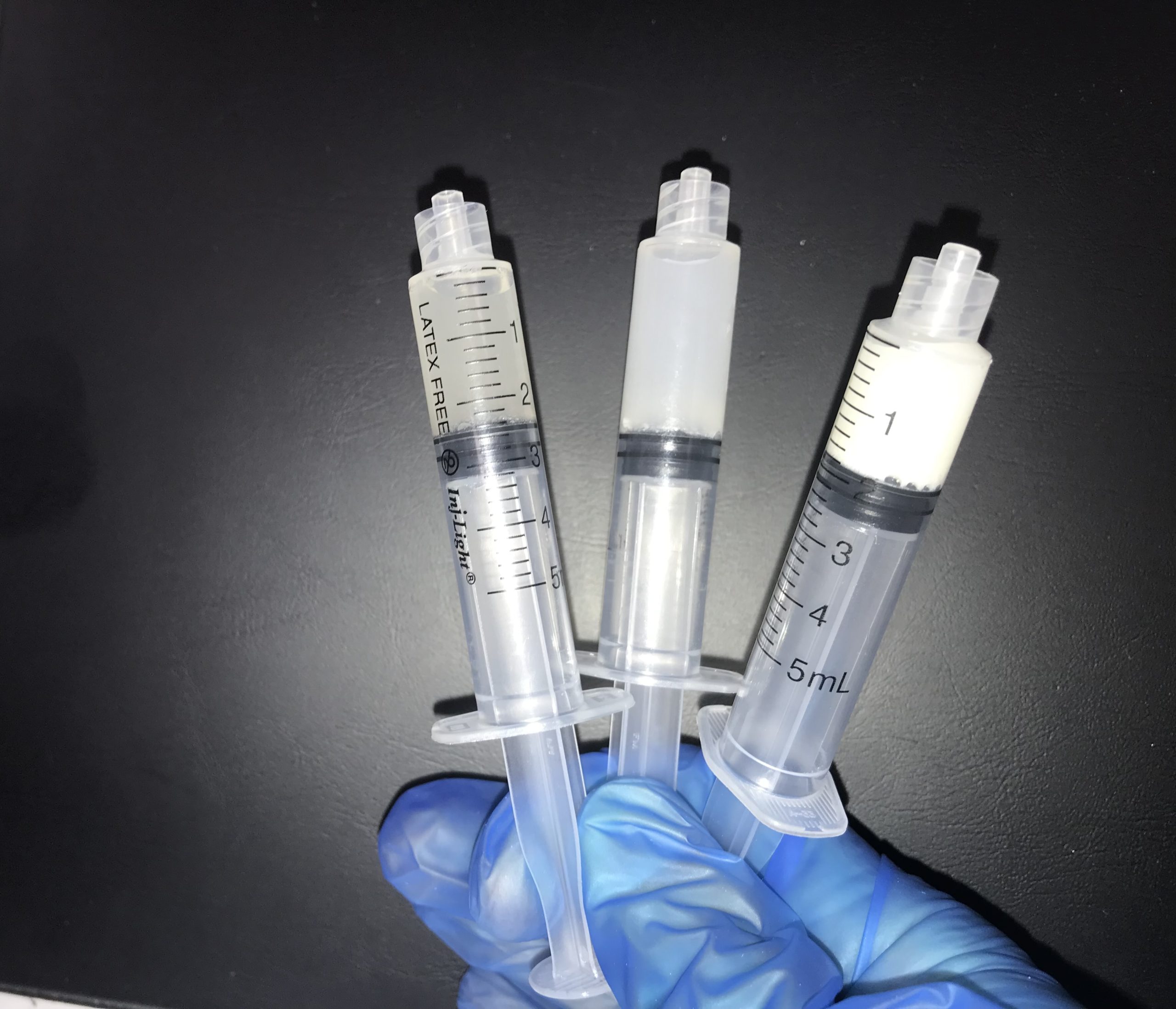
Cingal syringe


What to Expect During and After Treatment

The Procedure
Cingal® is administered as a single injection directly into the knee joint. It takes just a few minutes and can be done during a routine clinic visit. No general anaesthesia is required.

After the Injection
You may feel slight swelling or tenderness around the joint for a day or two. It’s best to avoid intense activity for 48 hours, but you can usually resume light daily tasks immediately.

When Will I Feel Relief?
Most patients notice relief within a few days thanks to the corticosteroid. The HA component builds up over the following weeks, supporting ongoing comfort and joint movement.

How Long Will It Last?
Clinical studies show pain relief may last up to 6 months from a single injection.

When to use Cignal?

Cingal is particularly suitable for individuals with mild to moderate osteoarthritis of the knee who:

  • Are no longer responding to over-the-counter pain relief
  • Want to remain active without resorting to surgery
  • Prefer a one-visit treatment with fast, noticeable benefits
  • Cingal is suitable for patients managing multiple joint pain for example hips, shoulders, or knees.

How is Cingal different from standard joint injections?

Unlike standard HA or cortisone injections given separately, Cingal combines both in one injection — giving you immediate and sustained pain relief.

Is it safe?

Both components in Cingal (HA and corticosteroids) are clinically proven and have been used safely for decades. Side effects are generally mild and short-lived.

Can I have more than one injection?

Yes. If Cingal works well for you, it can be repeated after approximately six months, depending on your condition and clinician advice.

What joints can be treated?

Cingal is CE-mark approved for knee osteoarthritis, but the principles of viscosupplementation can be discussed for other joints such as hips or shoulders, based on your needs.

Where can I learn more about Cingal Injection Therapy?

If you want more detail about outcome measures, clinical studies, etc., please see the Cingal website

Book Your Cingal® Consultation

Take the next step toward easier movement and a more active lifestyle.

Contact us today to book your consultation at Meyer Physio, or learn more about this treatment.

📞 Call us: 07736 731 022

📧 Email: enquiries@meyerphysio.com 


Cingal® is a registered trademark, and the Cingal® logo and images copyright of Anika Therapeutics, Inc. .

Arthrosamid Knee Injection

Long-lasting relief from knee osteoarthritis – without surgery

Knee osteoarthritis narrows your life gradually. Stairs, the dog walk, standing at the sink, getting out of a low chair — each becomes something to plan around. For many people the next thing offered is a knee replacement, and not everyone is ready for that.

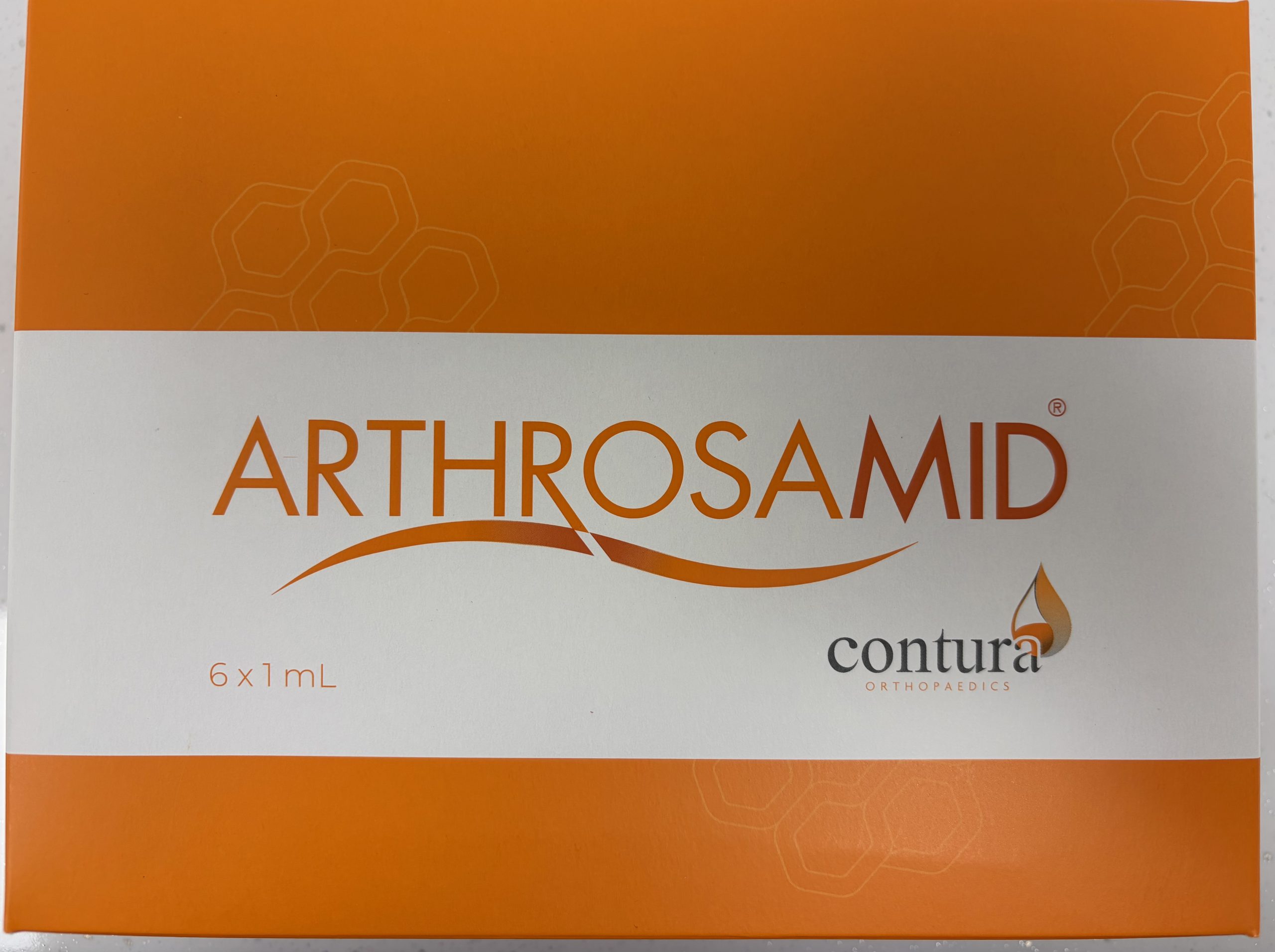
Arthrosamid is a single hydrogel injection that relieves knee osteoarthritis pain, reduces stiffness and restores function, without surgery. Meyer Physio is an approved Arthrosamid clinic, offering it privately in Weybridge, Surrey.

Arthrosamid logo

What Is Arthrosamid?

Arthrosamid hydrogel knee injection at Meyer Physio, WeybridgeArthrosamid® is an advanced, long-lasting injectable hydrogel designed to relieve knee osteoarthritis pain without the need for surgery. Made from 97.5% water and 2.5% cross-linked polyacrylamide, it offers long-lasting relief from a single injection — considerably longer than is typically seen with alternative treatments such as hyaluronic acid or Cingal injections.

It integrates with the joint lining, known as the synovium, enhancing lubrication, cushioning the joint, and reducing inflammation to improve comfort and mobility.

Why Choose Arthrosamid?

Knee osteoarthritis pain treated with Arthrosamid in Weybridge

  • Lasting Relief – Benefit from a single injection, with clinical studies showing effects lasting up to three to five years.
  • Non-Surgical – Outpatient procedure with no hospital stay or downtime.
  • Clinically Proven – The polyacrylamide hydrogel technology is backed by over 20 years of research.
  • Delays Surgery – May help to delay knee replacement.
  • Excellent Results – 70–75% report a significant improvement in symptoms; up to 50% describe it as “life-changing”. For more on results and outcome studies, see the Arthrosamid website.

How Does Arthrosamid Work?

Knee osteoarthritis leads to cartilage breakdown and inflammation in the synovial lining of the joint.

Once injected, Arthrosamid:

  • Bonds with the joint lining to create a soft, cushioning barrier
  • Enhances lubrication within the joint
  • Reduces synovial inflammation and associated pain
  • Improves joint function and mobility

What to Expect

Step 1 – Consultation

Your clinician will assess your knee and determine whether Arthrosamid is suitable for you.

Step 2 – Injection

You will be given antibiotics about an hour before your Arthrosamid treatment to protect you from any potential risk of infection.Ultrasound guided knee injection

To ensure the hydrogel is delivered to the precise location in the joint, we always perform ultrasound guided injection therapy.

Local anaesthetic is used to numb the area, and the hydrogel is then injected directly into the knee joint in a single, one-step procedure.

Step 3 – Aftercare

Mild discomfort may occur once the anaesthetic wears off. We’ll advise you on post-treatment care and symptoms to monitor, though side effects are rare.

The clinician who assessed your knee and gave the injection is the same one who sees you afterwards, so your follow-up carries on from the treatment rather than starting again with somebody new.

Is Arthrosamid Right for Me?

It may be a good option if:

  • You have knee osteoarthritis that’s no longer responding to physiotherapy, exercise, or standard pain relief
  • You want to avoid or delay surgery
  • You’re seeking a long-term solution with minimal disruption to your lifestyle

Private Arthrosamid treatment in Weybridge

This treatment is not routinely funded on the NHS, so it is provided privately on a self-pay basis. We are an approved Arthrosamid clinic and carry out the assessment, the ultrasound-guided injection and your follow-up in Weybridge, so there is no onward referral to another provider and no waiting list.

Your first appointment is a full hour of assessment. Where Arthrosamid is the right option we explain what it involves, what it is likely to achieve and what it costs, and arrange the treatment once you have had time to consider it.

Frequently Asked Questions

How soon will I feel the results?

Most people start noticing improvements around 4 weeks post-injection.

Does the injection hurt?

Local anaesthetic is used to numb the area first, and most people tolerate the procedure well. You may feel pressure as the hydrogel goes in, and the knee can be mildly sore for a few days afterwards. Tell us at any point if you are uncomfortable.

How long does Arthrosamid last?

Clinical studies show benefits may last up to three to five years from a single injection.

What is the recovery time?

This is an outpatient procedure with no hospital stay and no significant downtime. Mild discomfort is common once the local anaesthetic wears off. You will be given specific aftercare advice at your appointment, and the Arthrosamid patient rehab booklet below sets out the exercise guidance that follows treatment.

Are there any side effects?

Side effects are rare. The most common is temporary discomfort or swelling around the knee in the days after the injection. Antibiotics are given about an hour beforehand as a precaution against infection. We will go through the risks with you at your consultation and tell you what to watch for afterwards.

Can I still have knee replacement surgery later?

Yes — Arthrosamid doesn’t interfere with the possibility of future knee surgery.

Can I receive Arthrosamid treatment in both my knees?

Yes, it is possible to have both knees treated with Arthrosamid but your clinician is best placed to decide the time period before the treatments. Please contact us for a discounted price for treatment of more than one joint.

How much does Arthrosamid cost?

It is provided as a single treatment package. Current fees are on our treatment pricing page, and a discounted price applies where both knees are treated.

Where can I get more information?

If you have any questions about this treatment or would like to know whether it’s suitable for you, feel free to get in touch with Meyer Physio by phone or email. You can also explore the patient brochure and leaflets linked below, or the official Arthrosamid website for further information.

Arthrosamid Brochures

To learn more about the Arthrosamid treatment, download a patient brochure or patient leaflet from the Arthrosamid website below:

  • Arthrosamid® Patient Brochure
Download
[Link verified 21/08/2026]
  • Arthrosamid® Patient Leaflet
Download
[Link verified 21/08/2026]
  • Arthrosamid® Patient Rehab Booklet
Download
[Link verified 21/08/2026]

* Arthrosamid®, the Arthrosamid logos and images are copyright Contura International Ltd.

Book Your Arthrosamid Consultation Today

If you’re ready to take the next step in managing your knee pain, we’re here to help. Contact us to discuss your treatment or book your assessment consultation at Meyer Physio in Weybridge.

📞 Call us: 07736 731 022

📧 Email: enquiries@meyerphysio.com


Written by Suegnet Meyer, Advanced Practice Musculoskeletal Physiotherapist and MSK Sonographer. HCPC registered [PH55635]. Chartered Society of Physiotherapy member [66175].
Last reviewed: 10 September 2026.

High-Volume Injections for Tendinopathy

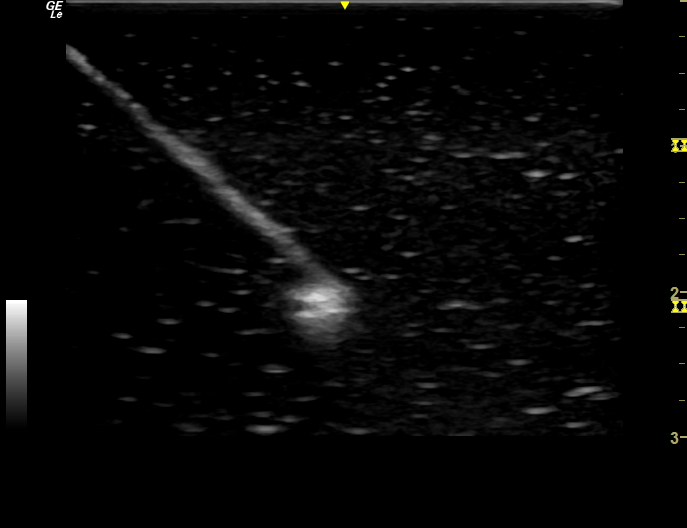
Ultrasound-guided high-volume injection, needle visualisation at Meyer Physio, WeybridgeHigh-volume injection is an ultrasound-guided treatment sometimes used for persistent Achilles tendinopathy or patellar tendinopathy that has not improved with rehabilitation.

A stubborn tendon is a particular kind of frustrating. You have done the exercises, given it months, and it still hurts on the stairs or three minutes into a run. Progress stalls, starts, and stalls again.

A relatively large volume of fluid is carefully injected into the tissue plane alongside the tendon. The fluid is not injected into the tendon itself.

The aim is to mechanically separate the tendon from the surrounding tissues. The proposed mechanism also involves disrupting the small abnormal blood vessels and associated nerve fibres that can develop in a longstanding tendinopathy, although that mechanism is not established with certainty.

Who a high-volume injection is for

This is not a first-line treatment. It is considered when a tendinopathy has persisted despite a properly progressed loading programme, which means the first question is usually whether the rehabilitation itself was adequate and continued for long enough.

It is most often used for the Achilles and patellar tendons.

The evidence for high-volume injections

The evidence for high-volume injections is mixed, and they are not appropriate for every patient. We would rather say so at the outset than leave you to discover it afterwards.

In practice the decision rests on how long the problem has been present, what the tendon looks like on assessment, and what has already been tried. An ultrasound assessment helps establish whether the treatment is likely to be suitable, and whether the diagnosis is correct in the first place, since Achilles pain is not always tendinopathy.

What happens during a high-volume injection?

The procedure is performed using real-time ultrasound guidance, so the needle and the surrounding structures can be seen throughout.

After the skin is cleaned, a small amount of local anaesthetic is used to numb the area. The needle is then positioned under ultrasound guidance in the tissue plane next to the affected tendon, and a larger volume of fluid is introduced gradually into that space.

The exact solution and volume depend on which tendon is being treated and on your individual circumstances. The procedure is usually completed within a normal clinic appointment.

Does a high-volume injection hurt?

Most patients tolerate it well. The local anaesthetic reduces discomfort from the needle and the injection itself.

You may notice pressure, tightness or a feeling of fullness as the fluid goes in, and some temporary soreness afterwards once the anaesthetic wears off.

The injection is given slowly under ultrasound guidance, and you can tell us at any point if you are uncomfortable.

Recovery and aftercare

Plan for a relatively quiet period immediately afterwards. The treated area may feel numb for several hours because of the local anaesthetic, followed by some temporary soreness.

Avoid strenuous exercise and heavy loading of the treated tendon at first. Tendon loading is then reintroduced progressively.

When you restart strengthening, running or sport depends on which tendon was treated, your symptoms and what you need the tendon to do for work or sport. You will be given individual advice on this.

Rehabilitation is still the treatment

A high-volume injection is considered as part of a wider programme rather than instead of one. Progressive tendon loading remains the central part of recovery, and the injection is best understood as something that can create the conditions for that work.

Rehabilitation is planned alongside the procedure rather than afterwards. The clinician who scans the tendon and performs the injection is the same one who then builds and progresses the loading programme, so the two are designed together rather than handed between people. There is more on our approach to ultrasound-guided injections.

Not the same as hydrodilatation

Both procedures use ultrasound guidance and both involve injecting fluid, but they treat different problems. A high-volume injection is placed around a tendon. Hydrodilatation is placed inside the shoulder joint to stretch a contracted capsule in a frozen shoulder.

How much does a high-volume injection cost?

The price includes the prescribed medication. Current prices are listed on the prices page.

Assessment in Weybridge

Meyer Physio assesses and treats persistent tendon problems at its clinic on Baker Street in Weybridge, Surrey, combining diagnostic ultrasound, injection therapy and rehabilitation in one place. You can come to us directly, with no GP referral needed.

Your first appointment is a full hour of assessment, with a diagnostic scan where that will help. Where a high-volume injection is the right next step, we explain what it involves and what to expect, and arrange the procedure once you have had time to consider it.

Prior to proceeding with high-volume injection treatment you must provide consent by filling out the form: Informed Consent High Volume injections

For Further Information

If a tendon problem has stopped responding, you need more information about high-volume injection procedures, or you would like to book an assessment consultation today, please contact us at Meyer Physio in Weybridge.

📞 Call us: 07736 731 022

📧 Email: enquiries@meyerphysio.com


Written by Suegnet Meyer, Advanced Practice Musculoskeletal Physiotherapist and MSK Sonographer. HCPC registered [PH55635]. Chartered Society of Physiotherapy member [66175].
Last reviewed: 10 September 2026.

Barbotage for Calcific Tendinopathy

Barbotage is an ultrasound-guided procedure that breaks down and removes the calcium deposits behind calcific tendinopathy, often called calcific tendonitis, most commonly in the shoulder.

Calcific shoulder pain can be severe. It can stop you sleeping on that side, lifting your arm above your head or getting through a day’s work, and it can arrive suddenly with no injury to explain it. Where the deposit is the problem and rehabilitation has not settled it, barbotage treats the calcium directly rather than working around it.

We provide barbotage at Meyer Physio in Weybridge, Surrey. You can come to us directly — you do not usually need a GP or consultant referral, and there is no waiting list. Your shoulder is assessed and scanned first, because whether barbotage will help depends on what the deposit actually looks like.

What is a barbotage procedure?

Barbotage is a minimally invasive procedure used to break down and remove calcium deposits in tendons, commonly in the shoulder. Using ultrasound guidance, a fine needle is inserted into the affected area to aspirate (remove) the calcium and flush the area with a saline solution.

The scan comes first: it shows where the deposit sits, how large it is and what it looks like, which is what determines whether barbotage is likely to help you.

Why is barbotage recommended?

Barbotage is recommended for patients with calcific tendinopathy who have persistent pain and reduced mobility despite other treatments like pain relief medications and physiotherapy. The procedure aims to:

  • Reduce pain and inflammation
  • Improve shoulder function
  • Avoid the need for surgery

Your barbotage is carried out by the same clinician who assessed your shoulder and scanned the deposit, and who then guides your rehabilitation afterwards. Because the procedure is planned as one step in getting the shoulder moving again, what follows it is decided before it is done. See more on ultrasound-guided injections.

What happens during the barbotage procedure?

Ultrasound-guided barbotage of a calcific deposit in the shoulder at Meyer Physio, Weybridge

  1. You will be positioned comfortably, and the skin over the affected area will be cleaned.
  2. A local anaesthetic will be injected to numb the area.
  3. Using ultrasound guidance, a thin needle will be inserted into the tendon to break up and remove the calcium deposit.
  4. The area will be flushed with saline, and a small amount of steroid medication is injected to reduce inflammation.
  5. A small dressing will be applied, and you will be monitored for a short period before going home.

What are the benefits of barbotage?

  • Minimally invasive, avoiding surgery
  • Short recovery time
  • Can reduce pain and improve function in appropriately selected patients

What are the risks of barbotage?

As with any procedure, there are some risks, including:

  • Mild pain or discomfort at the injection site
  • Temporary swelling or bruising
  • Infection (rare)
  • Incomplete removal of calcium, requiring further treatment
  • Temporary worsening of symptoms before improvement

Barbotage recovery time and aftercare

Most patients begin to notice improvement over the following three to four weeks. The shoulder can be uncomfortable for a short period immediately afterwards, so relative rest is advised at first, followed by a gradual return to movement.

  • Rest the treated area for 24–48 hours.
  • Apply an ice pack if needed to reduce swelling.
  • Avoid strenuous activity for 1–2 weeks.
  • You may be advised to do specific physiotherapy exercises.
  • Pain relief medications like paracetamol or ibuprofen can be taken as needed.

How much does barbotage cost?

The fee covers the medication, the sterile consumables and delivery of the procedure under ultrasound guidance. Current fees are listed on our prices page.

When to seek medical attention

Seek medical advice if you develop increasing pain that does not begin to settle, increasing redness, warmth or swelling around the injection site, discharge from the injection site, fever, or if you feel systemically unwell. Contact Meyer Physio, your GP or NHS 111 for advice. If you become acutely unwell, seek urgent medical attention.

Informed Consent Form

If barbotage has been recommended for you, please read this page carefully and ask us any questions before giving your consent. To proceed with the treatment you must complete the form: Informed Consent Barbotage

Contact Us Today

If you are considering a barbotage procedure and would like to find out more, contact us or book your assessment consultation at Meyer Physio in Weybridge.

📞 Call us: 07736 731 022

📧 Email: enquiries@meyerphysio.com


Written by Suegnet Meyer, Advanced Practice Musculoskeletal Physiotherapist and MSK Sonographer. HCPC registered [PH55635]. Chartered Society of Physiotherapy member [66175].
Last reviewed: 10 September 2026.

Joint Aspiration & Soft Tissue Aspiration

What is a Joint Aspiration or Soft Tissue Aspiration?

An aspiration is performed by using a thin needle to take some of the fluid out of the joint or affected soft tissue. This procedure, also known as arthrocentesis, is one of the most common Injection Therapy procedures used for muscle and bone problems. Joint Aspiration is mostly done at the knee or shoulder.  A soft tissue haematoma may indicate a soft tissue aspiration.

When will a Joint Aspiration or Soft Tissue Aspiration be necessary?

If a joint is swollen, a sample of joint fluid (synovial fluid) can help to find the cause of swelling. A sample of the fluid may be tested to find out whether, for instance, it contains bacteria  or abnormally high levels of white blood cells.

In some cases, the excess fluid (effusion) causes pressure and pain. By removing some of the fluid during the aspiration will help to reduce pain and promote healing.  Aspiration may also be used as a treatment, to reduce the pressure on the joint or soft tissue.

How is an aspiration performed?

The clinician uses the syringe to remove the excess fluid. If needed, medication can be injected into the joint during joint aspiration.

Special preparation is usually not needed. The surrounding skin is carefully disinfected beforehand to keep germs from entering the joint. The clinician wears sterile disposable gloves during the procedure to avoid any infection. Sterilized disposable cannulas and syringes are unpacked right before use.

The clinician can use diagnostic ultrasound to locate the position where the aspiration is required. Diagnostic ultrasound is sometimes used to monitor the entire procedure. A local anaesthetic may be used, if required.

A pressure bandage is often applied after the procedure. The joint itself usually needs to be kept still – how long will depend on the cause of the swelling and whether medication was injected during the aspiration.

Is it painful? 

Joint aspiration typically feels a bit like having blood drawn.  Depending on the type of aspiration, a local anaesthetic may be used.

What happens after the procedure and what should I look out for?

Afterwards it is important to watch carefully for signs of inflammation. If the joint or puncture site are red, swollen or start feeling very warm, you should inform your clinician immediately. Other warning signs include fever and worsening pain.

What are the risks involved?

There may be bleeding in the joint or soft tissue, afterwards. Inflammation at the needle insertion site is possible. If medication is injected as well, it may cause a feeling of pressure or a short burning sensation. The medication might have side effects such as allergic reactions too. Anti-inflammatory drugs can lead to facial redness, increased blood pressure, a racing heartbeat and flushing.

The greatest risk is that of an infection caused by germs that have managed to get in. This risk varies depending on what is done during the aspiration and which joint is involved. Diabetes or a weakened immune system increase the risk of infection.

Where can I find out more before considering the procedure?

Please contact us: suegnet@meyerphysio.com

Hyaluronic Acid Injections for Arthritic Joints

Hyaluronic acid injection, also known as viscosupplementation, is a pain-relieving treatment for osteoarthritis, and is most often used where the joint changes are mild to moderate. It can be used in almost any arthritic joint. The knee is the most common, but the same treatment is used in the shoulder, hip, ankle, the small joints of the hand and thumb, and the big toe.

Biolevox hyaluronic acid injection used at Meyer Physio, WeybridgeDurolane hyaluronic acid injection for knee osteoarthritis

What is hyaluronic acid?

Hyaluronic acid is a naturally occurring substance found in the synovial fluid of your joints, where it acts as a lubricant and a cushion. In a joint affected by osteoarthritis those natural levels are depleted, and an injection supplements them.

Why have a hyaluronic acid injection?

The aim is to lubricate and cushion the joint, reducing pain, improving how the joint moves, and potentially delaying the need for more invasive treatment such as surgery. It is an option where joint pain persists despite rehabilitation and simple pain relief.

Which joints can be treated?

Almost any osteoarthritic joint can be considered. In practice the most common are:

  • Knee osteoarthritis, the most frequently treated joint
  • Shoulder osteoarthritis
  • Hip osteoarthritis
  • Ankle osteoarthritis
  • The small joints of the hand, including the base of the thumb
  • The big toe

Which hyaluronic acid do you use?

We use Durolane, Synvisc One and Biolevox. Durolane is the one we use most often. Which product suits you is decided at your appointment, once the joint has been scanned and assessed, and depends on the joint being treated, the state of the joint and how you responded to any previous injections.

How long does a hyaluronic acid injection last?

This depends on the product. Durolane (Bioventus) is a single injection that works for up to 26 weeks. Some other hyaluronic acid preparations are given as a course of injections over a few weeks rather than as one.

Other options for an arthritic knee

Two related treatments may also be considered. Cingal combines hyaluronic acid with a steroid in a single injection, so it can settle inflammation quickly as well as lubricating the joint. Arthrosamid is not a hyaluronic acid at all but a hydrogel, given as one injection and intended to last considerably longer.

How is the injection done?

The injection is given in clinic as an outpatient procedure, and hyaluronic acid is injected directly into the joint through a fine needle.

Like all injections at Meyer Physio, it is placed under live ultrasound guidance, so the medication reaches the joint space itself rather than the tissue around it. That makes the injection more accurate and more comfortable than one placed by feel, and in small joints such as the thumb or the big toe it is what makes an accurate injection realistic at all.

How effective is it?

Results vary between individuals. Some people get significant pain relief and noticeably better joint function; others benefit less. It is worth having realistic expectations and discussing the likely outcome for your particular joint before going ahead, which is part of what the assessment appointment is for.

Side effects

Common side effects are temporary pain or swelling at the injection site. Infection and allergic reactions are rare. Tell us about any allergies or medical conditions before the procedure.

After your injection

Avoid strenuous activity involving the treated joint for about 24 to 48 hours afterwards. You will be given specific post-treatment instructions at your appointment.

What does it cost?

The fee covers the medication, the sterile consumables and delivery of the injection under ultrasound guidance — there is no separate charge for the guidance. Current fees are on our treatment price list.

Informed Consent

Please follow the link: Informed consent for hyaluronic acid injections

Book Your Assessment Today

If osteoarthritis pain is limiting you and you would like to know whether a hyaluronic acid injection would help, contact us or book an assessment at Meyer Physio in Weybridge. We scan the joint, explain what we find and agree the right treatment in the same appointment.

📞 Call us: 07736 731 022

📧 Email: enquiries@meyerphysio.com


Written by Suegnet Meyer, Advanced Practice Musculoskeletal Physiotherapist and MSK Sonographer. HCPC registered [PH55635]. Chartered Society of Physiotherapy member [66175].