
High-Volume Injections for Tendinopathy
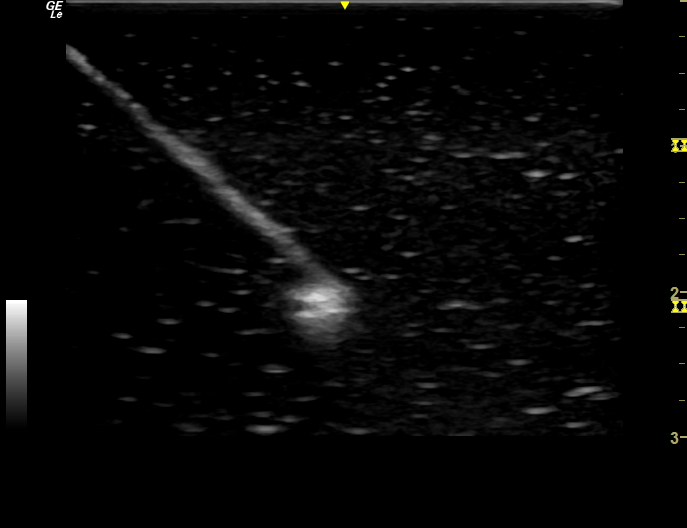 High-volume injection is an ultrasound-guided treatment sometimes used for persistent Achilles tendinopathy or patellar tendinopathy that has not improved with rehabilitation.
A stubborn tendon is a particular kind of frustrating. You have done the exercises, given it months, and it still hurts on the stairs or three minutes into a run. Progress stalls, starts, and stalls again.
A relatively large volume of fluid is carefully injected into the tissue plane alongside the tendon. The fluid is not injected into the tendon itself.
The aim is to mechanically separate the tendon from the surrounding tissues. The proposed mechanism also involves disrupting the small abnormal blood vessels and associated nerve fibres that can develop in a longstanding tendinopathy, although that mechanism is not established with certainty.
Who a high-volume injection is for
This is not a first-line treatment. It is considered when a tendinopathy has persisted despite a properly progressed loading programme, which means the first question is usually whether the rehabilitation itself was adequate and continued for long enough.
It is most often used for the Achilles and patellar tendons.
The evidence for high-volume injections
The evidence for high-volume injections is mixed, and they are not appropriate for every patient. We would rather say so at the outset than leave you to discover it afterwards.
In practice the decision rests on how long the problem has been present, what the tendon looks like on assessment, and what has already been tried. An ultrasound assessment helps establish whether the treatment is likely to be suitable, and whether the diagnosis is correct in the first place, since Achilles pain is not always tendinopathy.
What happens during a high-volume injection?
The procedure is performed using real-time ultrasound guidance, so the needle and the surrounding structures can be seen throughout.
After the skin is cleaned, a small amount of local anaesthetic is used to numb the area. The needle is then positioned under ultrasound guidance in the tissue plane next to the affected tendon, and a larger volume of fluid is introduced gradually into that space.
The exact solution and volume depend on which tendon is being treated and on your individual circumstances. The procedure is usually completed within a normal clinic appointment.
Does a high-volume injection hurt?
Most patients tolerate it well. The local anaesthetic reduces discomfort from the needle and the injection itself.
You may notice pressure, tightness or a feeling of fullness as the fluid goes in, and some temporary soreness afterwards once the anaesthetic wears off.
The injection is given slowly under ultrasound guidance, and you can tell us at any point if you are uncomfortable.
Recovery and aftercare
Plan for a relatively quiet period immediately afterwards. The treated area may feel numb for several hours because of the local anaesthetic, followed by some temporary soreness.
Avoid strenuous exercise and heavy loading of the treated tendon at first. Tendon loading is then reintroduced progressively.
When you restart strengthening, running or sport depends on which tendon was treated, your symptoms and what you need the tendon to do for work or sport. You will be given individual advice on this.
Rehabilitation is still the treatment
A high-volume injection is considered as part of a wider programme rather than instead of one. Progressive tendon loading remains the central part of recovery, and the injection is best understood as something that can create the conditions for that work.
Rehabilitation is planned alongside the procedure rather than afterwards. The clinician who scans the tendon and performs the injection is the same one who then builds and progresses the loading programme, so the two are designed together rather than handed between people. There is more on our approach to ultrasound-guided injections.
Not the same as hydrodilatation
Both procedures use ultrasound guidance and both involve injecting fluid, but they treat different problems. A high-volume injection is placed around a tendon. Hydrodilatation is placed inside the shoulder joint to stretch a contracted capsule in a frozen shoulder.
How much does a high-volume injection cost?
The price includes the prescribed medication. Current prices are listed on the prices page.
Assessment in Weybridge
Meyer Physio assesses and treats persistent tendon problems at its clinic on Baker Street in Weybridge, Surrey, combining diagnostic ultrasound, injection therapy and rehabilitation in one place. You can come to us directly, with no GP referral needed.
Your first appointment is a full hour of assessment, with a diagnostic scan where that will help. Where a high-volume injection is the right next step, we explain what it involves and what to expect, and arrange the procedure once you have had time to consider it.
Prior to proceeding with high-volume injection treatment you must provide consent by filling out the form: Informed Consent High Volume injections
Written by Suegnet Meyer, Advanced Practice Musculoskeletal Physiotherapist and MSK Sonographer. HCPC registered [PH55635]. Chartered Society of Physiotherapy member [66175].
Last reviewed: 10 September 2026.